Drinks that don’t go with lunch – they are lunch!

by admin on August 19, 2008

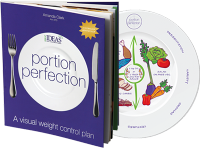
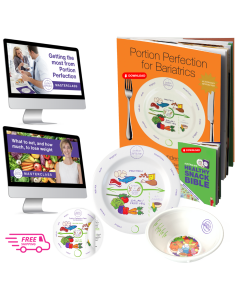
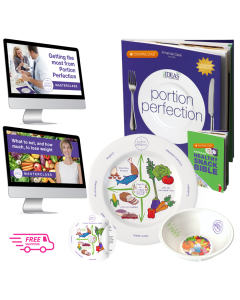
Click here to order the Portion Perfection book on Amanda Clark’s Great Ideas in Nutrition website.

According to latest reports, Australia is the world’s most overweight nation, ahead of the super-sized Americans.

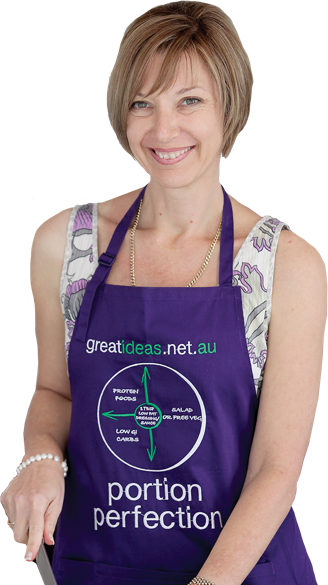
Nutrition surveys over the past 20 years have clearly established we are eating more calories than we used to. What was acceptable as a snack 20 years ago is now approaching the calories in an entire meal. Leading dietitian Amanda Clark compares the number of calories in various serving sizes in her new book Portion Perfection – A visual weight control plan, including:

Take-away coffees

Takeaway coffee in meal and snack sizes

Takeaway coffee in meal and snack sizes

20 years ago, a take-away coffee would have come in a 200ml polystyrofoam cup. It was made on water and even if you added full cream milk and sugar it wouldn’t be more than about 85 calories.

Today, a typical small milk-based coffee or hot chocolate would be 250ml – that’s 200 Calories (Cals). A Grande size at 470 ml provides up to 480 Cals, depending on the particular drink you’ve ordered. That is the equivalent number of calories in an entire meal for most people!

Flavoured milk

Flavoured milk 20 years ago and today

Flavoured milk 20 years ago and today

20 years ago, flavoured milk was sold in 300ml cartons, containing 220 Cals.

Now, 500 to 600ml is more the norm and the calorie count is up to 440 Cals. So a large milk drink doesn’t go with lunch … IT IS LUNCH!

Soft drinks

Soft drink size 20 years ago and today

Soft drink size 20 years ago and today

Now that manufacturers are pushing 600ml bottles of soft drink as the normal size, the smaller size is starting to look like a cute, old-fashioned model.

A 390 ml bottle contains 160 Cals – okay for an occasional snack if you’re a healthy weight.

A 600 ml bottle contains 245 Cals – a hefty addition to any meal.

Fresh Juices & Smoothies

600ml size takeaway juice or smoothie

600ml size takeaway juice or smoothie

A 600ml takeaway container holds around 300 Cals for a juice or up to 600 Cals in a Breakfast Smoothie.

A meal ideally contains 300 to 550 calories (1260 to 2310 kilojoules) and a snack 100 to 200 calories (420 to 840 kilojoules), depending on your gender, age and weight loss goals.

The Solution

It is possible to enjoy calorie-dense drinks occasionally with your meal without gaining weight. The key is getting your portion sizes right to meet your calorie needs. We are all unconsciously persuaded to eat more because of external factors like marketing, packaging and our environment. Various sized glasses give the illusion of holding more.

You can trick yourself into drinking less by choosing the right shaped glass…

200ml of OJ in different shaped glasses

200ml of OJ in different shaped glasses

200ml of OJ in different shaped glasses

These two different-shaped glasses are both shown holding 200ml of orange juice, which is 100 Calories.

The tall thin glass appears to hold more in its 200ml capacity, but the actual volume of the short fat glass is 300ml, which is 150 Calories – easily missed when you are drinking, but the Calories add up.

So how did our portions get so big?

The main reason behind increasing portion size is simply that food manufacturers want to make more money, and they have a number of clever ways of achieving this. Their aim is to persuade us to eat more of their products. There are two ways of doing this: they can sell more, although this isn’t necessarily easy to do. The simpler option is to make the products bigger (and therefore more expensive).

Food is actually a fairly small component of the cost of a food product. The main costs are the labour, the packaging and the advertising. It is therefore a very cheap option to offer extra-large portions as an attractive offer to consumers. For example, you can get an upgrade on a take-away meal which gives you 50 per cent more food for 16 per cent more money. Or the company decides to manufacture a ‘king-sized’ packet, which costs more, and then gradually phases out the original packaging size.

Another simple benefit of larger products from the manufacturer’s point of view is: the bigger the packet, the more visible it is on the supermarket shelf. Of course, consumers aren’t entirely blameless either. Where we fall down is that we are attracted to value for money deals – but is it value for money to eat more than you need? What is the actual cost in health and efforts to lose that excess weight gained?

Extract from Portion Perfection – A visual weight control plan by Amanda Clark

{ 1 trackback }

THE DENIM DIARIES » Blog Archive » Bloggerrific
October 14, 2008 at 12:27 am

{ 2 comments… read them below or add one }

rennae bryan-whyte October 3, 2008 at 10:14 am

I used to always get a huge boost juice with my meals.
I though i was helping my body :S

Renee Erfanian January 7, 2010 at 4:27 pm

I’m on the JC program and they are about portion control. I have cut my portion size down. Still mainly eat what I want.

Leave a Comment

Previous post:

Next post: